
Design Guides
Solutions to Common Kitchen Problems Super-Busy Customers Face (2026 Guide)

If your kitchen constantly feels like it's working against you, you're not imagining it. Kitchen dysfunction is now nearly as common a renovation trigger as wanting a new look — 38% of renovating homeowners cite deterioration or dysfunction as their reason to remodel, up 3 points year-over-year and closing in on the 41% who cite style dissatisfaction (Houzz 2026 U.S. Kitchen Trends Study). Here's what's actually causing the daily friction, and what fixes it.
Why "not enough time" is really a design problem
Busy households don't usually lack cooking motivation — they lack a kitchen that supports how little time they have. A 2026 Thumbtack survey of homeowners found 47% say they don't have enough kitchen storage, 36% cite poor layout or flow, and 26% say they lack sufficient countertop space. Those three complaints compound: a kitchen with nowhere to put things and no clear path through it makes every task — even a quick one — take longer than it should.
That's a design problem, not a discipline problem. The fix isn't "get more organized" — it's a layout and storage system that doesn't require constant maintenance to stay functional.
No landing zone means every meal stalls at the same bottleneck
The single most common workflow complaint we hear echoes the survey data above: nowhere to set down groceries, prepped ingredients, or dirty dishes without them colliding with each other. Without a dedicated landing zone, every task backs up behind the last one, which is exactly the kind of friction a time-pressed household can't absorb.
A working island or extended counter run solves this by separating prep, landing, and cleanup into distinct zones instead of forcing everything through one stretch of counter. We've covered the specific benefits an island adds to a kitchen's workflow in our kitchen island benefits guide rather than repeating that case here.
Constant searching is a storage design problem, not a storage amount problem
Digging for the right pan or spice mid-recipe rarely means you don't have enough storage — it usually means what you have isn't organized for how you actually cook. Pull-out organizers, deep drawers, and vertical dividers turn cabinets you already own into storage you can actually use without stopping to search. We've covered the specific accessories that solve this in detail in our cabinet accessories guide.
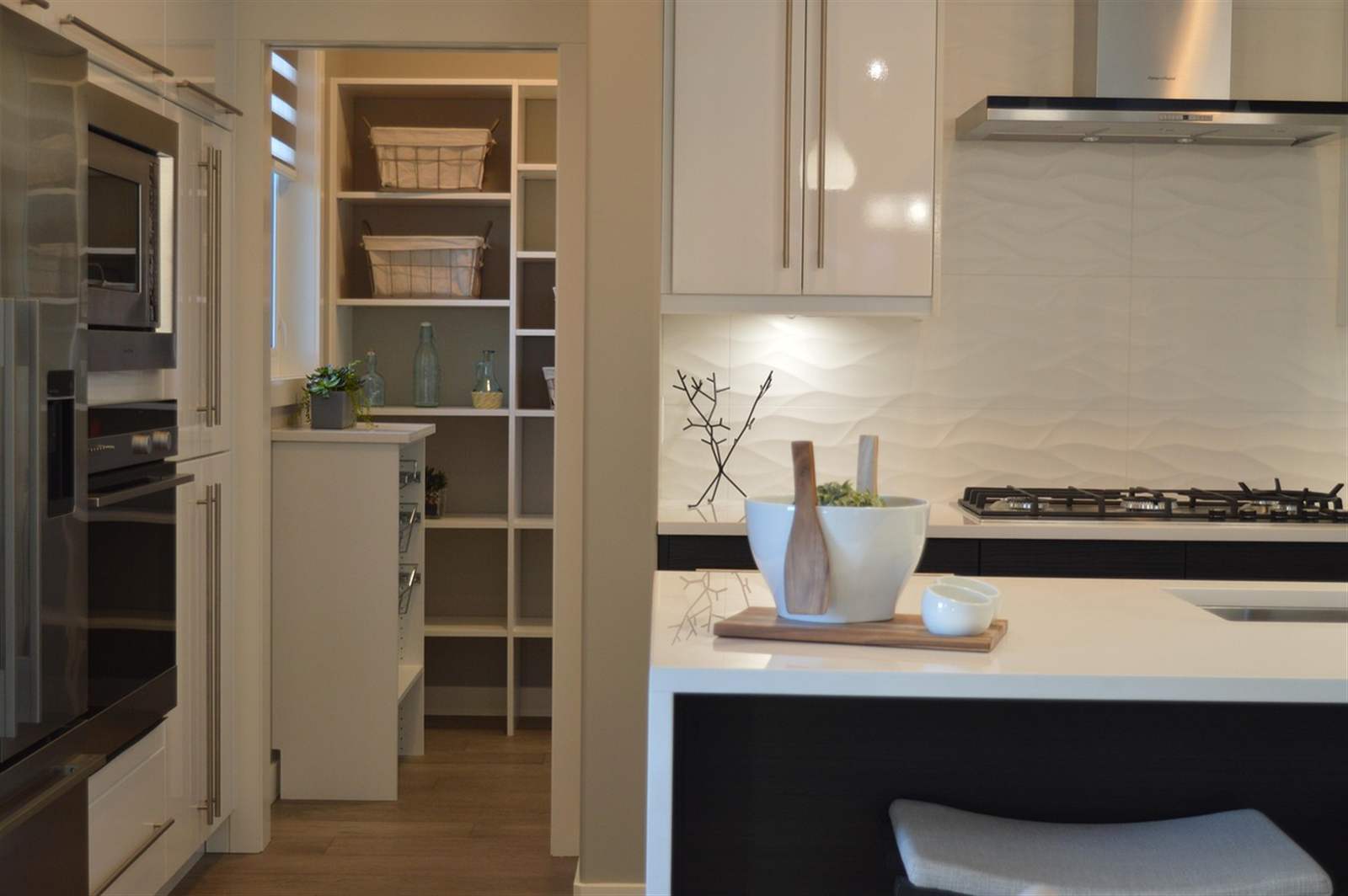
Pantries are a clear example of this shift in practice — pantry cabinets now appear as a built-in feature in 47% of kitchen remodels, and dedicated beverage stations in 24%, both explicitly aimed at making daily routines faster rather than just adding capacity (Houzz 2026 Kitchen Trends Study).
Your kitchen is doing more jobs than it was designed for
Kitchens have quietly become the default room for far more than cooking. In the same Thumbtack survey, 62% of homeowners say they regularly socialize in the kitchen, 45% pay bills or plan schedules there, and 43% use it for hobbies or personal projects. None of that is unusual anymore — it's the default use case a kitchen needs to be designed around, not an exception to plan for.
Our finding: the clients most frustrated with their kitchen aren't usually bad cooks or bad organizers — they're running three activities through a room designed for one. Once we carve out even a small dedicated zone for the non-cooking tasks, the actual cooking workflow gets dramatically less crowded.
If a homework or bill-paying station is competing for space with your prep counter, a small dedicated nook — even a narrow desk-height counter away from the main cook zone — removes that daily conflict entirely.
Meal prep needs counter space that stays clear, and surfaces that clean up fast
Batch cooking and meal prep only save time if the kitchen supports doing several tasks at once without a mid-session cleanup. That means enough contiguous counter space to lay out ingredients for multiple meals simultaneously, not just enough for one dish at a time.
Surface choice matters just as much as counter length. Low-maintenance, easy-to-clean materials are one of the fastest-growing priorities in current kitchen design, and design professionals overwhelmingly expect that trend to continue — 78% expect quartz specifically to remain the dominant countertop surface, citing zero sealing requirements and easy soap-and-water cleanup as leading reasons, not just durability (NKBA 2026 Kitchen Trends Report). If you're still comparing materials, our countertop materials guide covers the full durability and maintenance comparison.

Common problems, root causes, and fixes
| Problem | Root Cause | Design Solution |
|---|---|---|
| Meals stall with nowhere to land groceries, prep, or dishes | Insufficient counter space, no dedicated zones | Working island or extended counter run to separate prep, landing, and cleanup |
| Constant searching mid-cook | Poor storage design, not poor storage amount | Pull-out organizers, deep drawers, vertical dividers |
| Cooking, cleanup, and traffic collide | No defined workflow zones | Reorganize around distinct prep/cook/clean zones |
| Counters take too long to wipe down | Porous or high-maintenance surface materials | Non-porous, no-seal materials for daily-use zones |
| Homework or bills compete with meal prep | No dedicated multitasking zone | Small desk nook or secondary counter away from prep zone |
| Pantry items lost or duplicated | Deep, unlabeled shelving | Shallow, labeled, zoned pantry shelving |
Source: Thumbtack Kitchen Glow-Up survey, Houzz 2026 Kitchen Trends Study, NKBA 2026 Kitchen Trends Report.
Frequently asked questions
Why does my kitchen always feel behind, even when I'm not cooking a complicated meal?
Usually because there's no dedicated landing zone for groceries, prep, or dirty dishes, so every task backs up behind the last one. A working island or extended counter run separates these into distinct zones.
Is more storage the answer to a cluttered kitchen?
Not necessarily. Most storage complaints come from poor organization within existing cabinets, not too little cabinet space. Pull-out organizers and vertical dividers often solve the problem without adding a single cabinet.
What countertop material is easiest to keep clean for a busy household?
Non-porous, no-seal materials like quartz are the leading choice among design professionals specifically for low daily maintenance, not just durability (NKBA 2026 Kitchen Trends Report).
Should my kitchen have a space for homework or paying bills?
If those tasks currently compete with meal prep for the same counter, yes. A small dedicated nook removes that daily conflict, since most households already use their kitchen for far more than cooking.
What's the most common kitchen complaint among homeowners?
Insufficient storage, cited by roughly half of surveyed homeowners, followed by poor layout or flow and lack of countertop space (2026 Thumbtack homeowner survey).
The bottom line
A kitchen that fights a busy schedule almost always comes down to the same handful of causes: no dedicated landing zone, storage that isn't organized for how you actually cook, high-maintenance surfaces, and no space carved out for the non-cooking tasks a kitchen now routinely handles. None of these require more square footage to fix — they require a layout and storage system built around your actual daily pace.
Book a design consultation and we'll help you design a kitchen that keeps up with your schedule instead of slowing it down.