
Design Guides
Kitchen Backsplash Height: Standard vs. Full Height (2026)
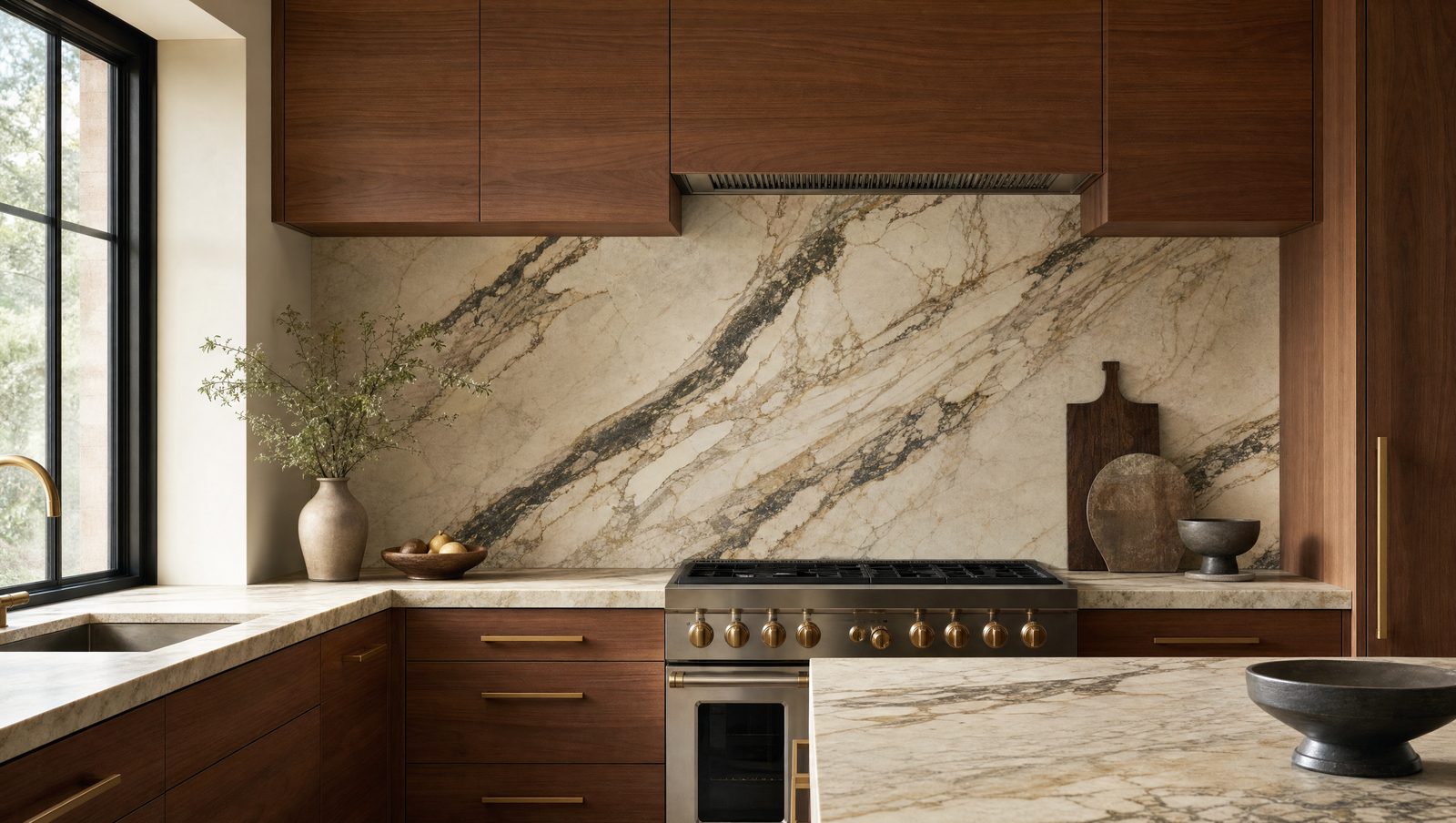
A backsplash decision looks small until you see the two options side by side. A standard 4-inch backsplash is a quiet, budget-friendly ledge. A full-height backsplash runs counter to cabinet and becomes the focal point of the room. Here's how we help clients choose between them — and where each one pays off.
What is the difference between a standard and full-height backsplash?
A standard backsplash is a short ledge — usually 4 inches, within a 3-to-6-inch range — that matches your countertop material (Fabuwood, 2026). A full-height backsplash fills the entire wall between the countertop and the upper cabinets, roughly 18 inches, and sometimes runs to the ceiling behind a range.
The difference is part protection, part statement. Standard covers the splash zone right at the counter. Full height protects the whole wall and turns it into the kitchen's centerpiece.
| Feature | Standard (4") | Full height (~18"+) |
|---|---|---|
| Height | 3–6 in (4 in typical) | Counter to cabinets, or to ceiling |
| Added cost | Minor — scales with size | Significantly more material |
| Install | With the countertop, one step | Two-step: counter, then remeasure |
| Wall protection | Splash zone only | Full wall |
| Look | Classic, understated | Focal point, dramatic |
Source: Fabuwood, Granite Guy & Marble & Granite Tech, 2026.
How does the cost compare?
A standard 4-inch backsplash adds very little to your total, and what it costs scales with the size of your kitchen — roughly four extra square feet of material plus edge finishing on a 12-foot run (Granite Guy, 2026). Full-height backsplashes use far more material — sometimes as much stone as the counters themselves — so they cost meaningfully more.
Installation adds labor on top of materials, and full-height sits on the higher end because there's more wall to cover and a two-step process. If budget is the deciding factor, a standard backsplash wins outright — and it still looks intentional, not cheap. For a firm number, get a quote against your exact kitchen.
When should you choose a standard 4-inch backsplash?
Choose the 4-inch backsplash when you want value and classic proportions. It installs with the countertop in a single step, keeps costs down, and pairs a slim stone ledge with painted or tiled wall above (Fabuwood, 2026). It reads as timeless, not dated.
Our finding: clients often assume 4-inch looks “builder-grade.” It doesn't. In plenty of high-end kitchens we build, homeowners deliberately pick the 4-inch ledge because it keeps the counter stone as an accent and lets a painted wall or a separate tile do the talking.
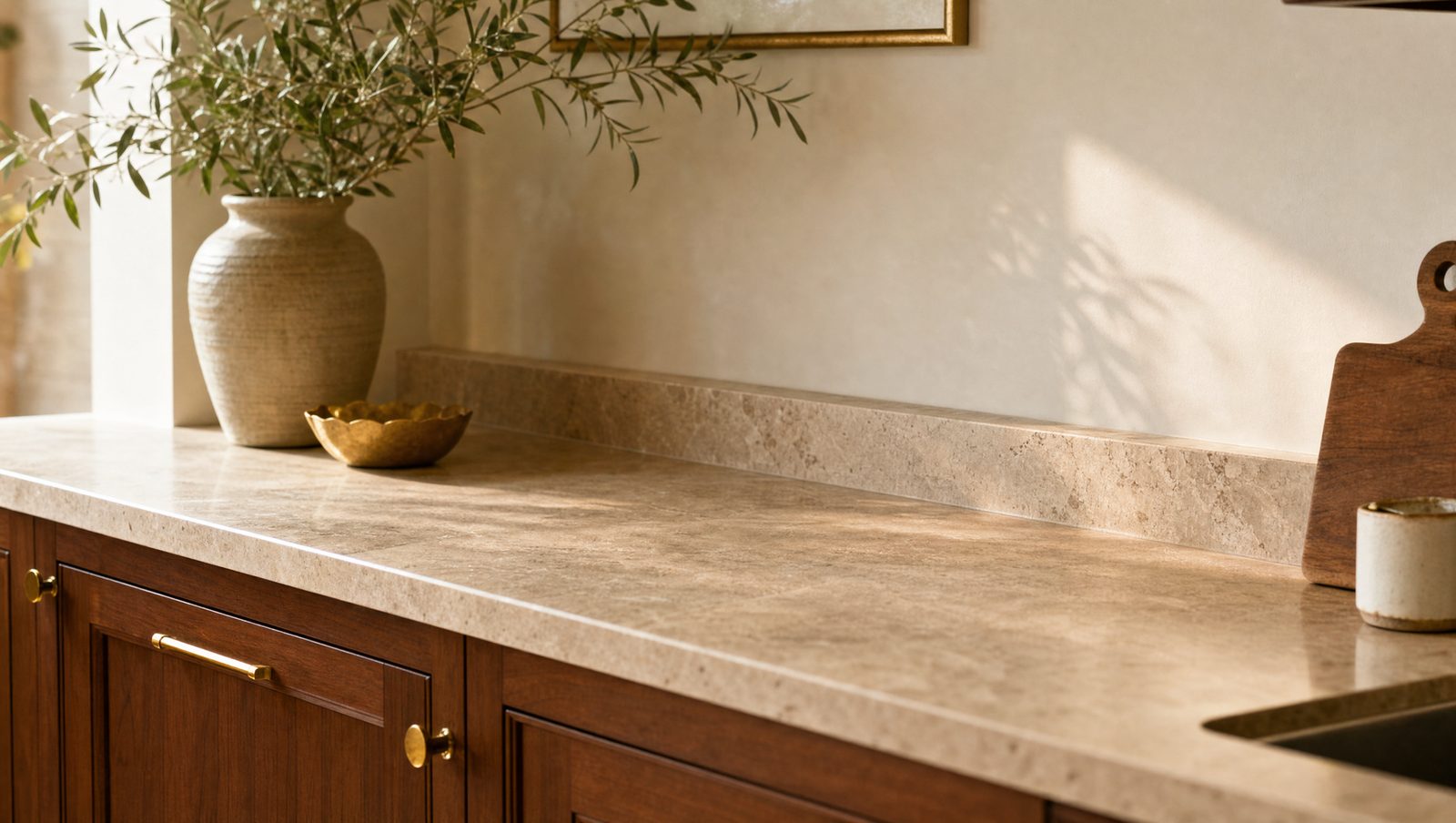
It's also the flexible choice. A short stone backsplash lets you add or change wall tile later without touching the counter.
When is a full-height backsplash worth it?
A full-height backsplash earns its cost when the wall is on display or takes abuse. Behind a range or a prominent run of counter, it protects the whole wall from grease and spills — and becomes the room's focal point (Marble & Granite Tech, 2026). A dramatic slab or full tile wall is hard to beat for impact.
It shines with a statement material. A veined marble or quartzite slab, run full height, turns a functional wall into the reason people remember the kitchen. If you're investing in a showpiece stone, full height is where it lands.
Which backsplash suits your kitchen best?
For most kitchens, the choice comes down to the wall and the material. A full-height backsplash makes a strong, cohesive statement and protects the entire wall, so it shines behind a range or with a showpiece stone. A standard ledge keeps things simple and lets a painted wall or accent tile carry the design.
Kitchens come in every size and style, so there's no single right answer. We size the backsplash decision alongside the counters and uppers so the wall, trim, and cabinet lines resolve cleanly. For the bigger budget picture, see our guide to what a custom kitchen renovation costs.
Frequently asked questions
What is the standard height for a kitchen backsplash?
The standard backsplash is 3 to 6 inches tall, with 4 inches by far the most common (Fabuwood, 2026). It matches the countertop material and installs at the same time as the counters.
How tall is a full-height backsplash?
A full-height backsplash runs from the countertop to the underside of the upper cabinets — roughly 18 inches — and sometimes continues to the ceiling behind a range (Marble & Granite Tech, 2026).
Is a full-height backsplash worth the extra cost?
It depends on the wall. Full height uses far more material than a standard ledge but adds full-wall protection and a strong focal point. It is worth it behind a range or with a statement stone.
Is a 4-inch backsplash outdated in 2026?
No. The 4-inch backsplash remains a classic, and homeowners in high-end kitchens still choose it for its proportions (Granite Guy, 2026). It looks intentional, not builder-grade, when detailed well.
Does a full-height backsplash cost more than a standard one?
Yes. A full-height backsplash uses far more material and labor than a 4-inch ledge, so it costs meaningfully more. The exact difference depends on the stone or tile, the size of the wall, and installation — get a quote for a firm figure.
The bottom line
The standard 4-inch backsplash is the value pick — classic, understated, and installed in one step. The full-height backsplash is the statement — full-wall protection and a focal point, using far more material. Match the choice to your wall, your stone, and your budget, and either one looks right.
Book a design consultation and we'll spec both against your kitchen exactly.